
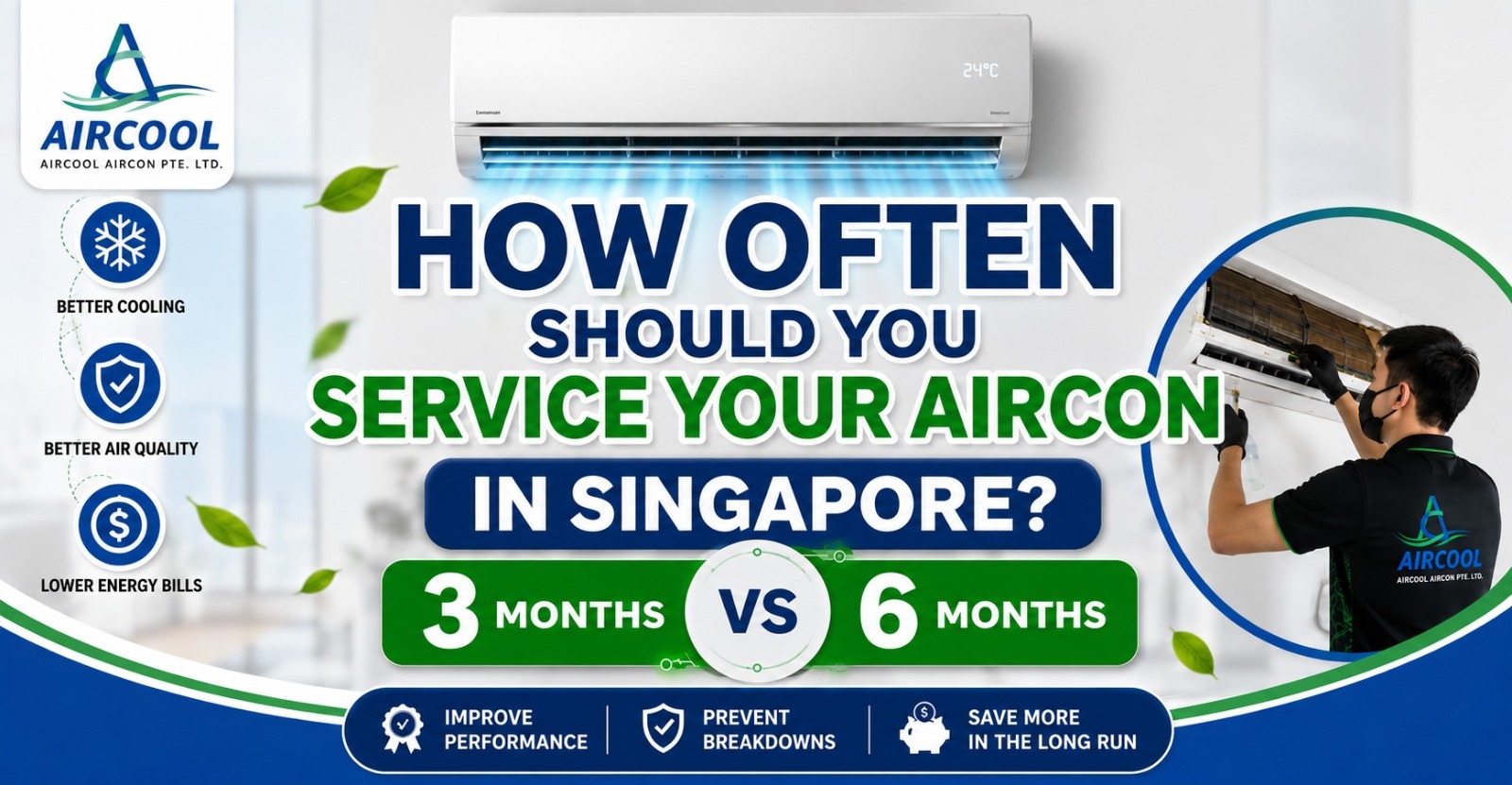
Living in Singapore means dealing with warm, humid weather every single day. For most homes and offices, an air conditioner is not just a nice luxury—it is an everyday essential. When you rely on your cooling unit day in and day out, dust, dirt, and moisture build up quickly inside the machine.
To keep the cool air flowing and prevent sudden breakdowns, regular servicing is necessary. But one common question many homeowners ask is: How often should you service your aircon in Singapore? Should you do it every 3 months or every 6 months?
This comprehensive guide breaks down the differences, helps you evaluate your usage patterns, and explains how to choose the right servicing schedule for your home.
Why Regular Aircon Servicing Matters in Singapore
Singapore’s climate is unique. It is warm all year round, and relative humidity levels regularly exceed 80%. When an air conditioner operates, it pulls warm, humid indoor air across cold cooling fins, drops the air temperature, and recirculates it into the room. As a result of this operation, moisture condenses within the system.
When this continuous moisture mixes with everyday household dust, pet dander, lint, and cooking residues, it creates a sticky layer of grime inside the cooling coils, fan blower wheel, and drainage tray.
Key Principle: Moisture + Trapped Dust = Slime, Mold Growth & Drainage Blockages.
If routine servicing is delayed or ignored, several issues emerge:
- Higher electricity bills: Dirt acts as an insulating blanket over the cooling parts. The compressor and fan must run longer and work harder to achieve your set temperature, causing electricity consumption to surge.
- Weak cooling performance: Even at 18°C, the airflow feels weak and lukewarm because clogged coils prevent proper heat exchange.
- Water leakage: Jelly-like mold and accumulated grime clog the narrow drain pipe. When condensed water cannot flow out freely, it overflows the drainage tray and drips down walls and floors.
- Foul odors and poor indoor air quality: Stagnant water and mold release musty odors that circulate throughout your home, potentially aggravating allergies, asthma, and sinus irritation.
The 3-Month Servicing Schedule: Who Needs It?
A 3-month schedule (quarterly servicing) means a qualified technician cleans, inspects, and vacuums key components four times a year. In Singapore’s tropical climate, this frequency is the recommended standard for heavy users.
1. Daily Heavy Users (8 to 24 Hours a Day)
If your air conditioner runs throughout the night and remains on during the day—particularly for work-from-home setups or home businesses—a 3-month cycle is ideal. With extensive daily runtime, dust and slime build up significantly within 80 to 90 days, leading to noticeable drops in cooling efficiency.
2. Homes with Pets
Dogs, cats, and small animals shed fur and dander continuously. Air intake filters quickly trap these fine particles, which can bypass the mesh and adhere to the wet cooling coils and blower fan much faster than in pet-free environments.
3. Proximity to Busy Roads or Construction
Homes facing main roads, expressways, MRT tracks, or nearby renovation and construction sites experience higher airborne particulate levels. Even with closed windows, fine dust enters via normal door traffic, demanding more frequent filter and coil cleanings.
4. Sensitive Individuals, Infants, and the Elderly
Young children, elderly family members, and individuals with respiratory conditions or allergies are particularly vulnerable to airborne mold spores and dust mites. Quarterly servicing ensures clean, hygienic air output year-round.
The 6-Month Servicing Schedule: Who Is It For?
A 6-month schedule (bi-annual servicing) involves professional maintenance twice per year. While less frequent, it provides sufficient upkeep for light to moderate usage patterns.
1. Light, Occasional Users (1 to 4 Hours a Day)
If you only turn on your air conditioner for a brief period before bedtime to cool the room, and rely primarily on a ceiling fan through the night, grime accumulates at a much slower rate.
2. Guest Bedrooms and Seldom-Used Rooms
Units installed in study rooms, dining areas, or guest suites that are utilized only on weekends or occasional gatherings do not generate sufficient condensation and dirt to warrant quarterly cleanings.
3. High-Floor Residences in Low-Dust Areas
Units situated on higher floors away from major traffic corridors and industrial activity benefit from cleaner ambient air, making semi-annual servicing a practical and budget-conscious choice.
Direct Comparison: 3 Months vs 6 Months
The following table summarizes the key distinctions between both servicing frequencies:
|
Evaluation Metric |
3-Month Schedule (Quarterly) |
6-Month Schedule (Bi-Annual)
|
|---|---|---|
|
Recommended Daily Runtime |
8 to 24 hours per day |
Under 5 hours per day |
|
Household Profile |
Work-from-home, children, pets, heavy cooking |
Working adults out all day, low occupancy |
|
Cooling Consistency |
Maintains peak efficiency and rapid cooling |
Cooling output may taper off before next service |
|
Risk of Water Leaks |
Near zero (drain lines flushed regularly) |
Moderate if condensation build-up is elevated |
|
Energy Efficiency Impact |
Consistently low power consumption |
Moderate energy savings |
|
Annual Maintenance Cost |
Higher service frequency, lower repair risks |
Lower upfront service costs |
Warning Signs Your Aircon Needs Immediate Servicing
Do not wait for your scheduled appointment if your cooling system displays any of the following symptoms:
- Warm Air Output: The unit blows room-temperature or lukewarm air despite low temperature settings.
- Water Dripping or Bubbling Sounds: Gurgling or visible dripping indicates a choked drainage tray that is overflowing.
- Musty Odors: A sour, damp smell upon turning on the machine signals mold and bacterial colonies inside the coil assembly.
- Frost or Ice Formation: Blocked airflow over cold coils causes moisture to freeze directly on the copper pipes and aluminum fins.
- Vibrating or Rattling Noises: Uneven dust accumulation on the blower fan wheel causes balance issues, resulting in mechanical vibration.
What a Standard Professional Service Includes
A comprehensive routine aircon maintenance session typically covers the following checklist:
- Cleaning Filters & Front Covers: The main mesh filters and plastic front casings are removed, rinsed thoroughly with clean water, and left to air-dry.
- Vacuuming & Brushing Evaporator Coils: Accumulated lint and surface debris trapped between the cooling fins are carefully brushed away and vacuumed.
- Drainage Line Flushing: Technicians use a high-pressure pump or specialized vacuum to dislodge slime and clear the drain pipe.
- Blower Fan Inspection: The internal cylindrical wheel is checked for dust accumulation and cleaned to restore smooth airflow.
- Operating Pressure & Electrical Check: The technician tests overall cooling output, electrical contacts, and refrigerant balance to verify system health.
Refer : How do you Clean and Maintain an aircon? Aircon maintenance
Practical Tips to Maintain Your Aircon Between Visits
Simple household habits can keep your unit running efficiently between professional visits:
- Rinse Mesh Filters Fortnightly: Clean front mesh screens under running tap water every 2 to 3 weeks to maintain unrestricted airflow.
- Seal the Room: Keep doors and windows tightly closed while operating to prevent warm, humid outside air from overworking the compressor.
- Pair with a Fan: Using a standing or ceiling fan circulates cool air efficiently, allowing you to set the thermostat to an energy-saving 24°C or 25°C.
- Keep Clearances Open: Avoid placing tall wardrobes or shelving units right beneath or in front of the indoor unit.
Conclusion: Choosing the Right Routine
Determining whether to service your air conditioner every 3 months or every 6 months comes down to your daily usage patterns and environmental exposure.
Opt for every 3 months if you run your aircon daily for long hours, work from home, have pets, or live in high-dust surroundings. Choose every 6 months if your units are used lightly or placed in secondary rooms. Keeping a consistent maintenance schedule ensures reliable cooling, lower energy bills, and prolonged machine lifespan in Singapore’s tropical climate.
Frequently Asked Questions
How often should aircon be serviced in Singapore?
For frequently used air conditioners, servicing every 3 months can be suitable. Units with lighter usage may only need professional servicing every 6 months.
Is it better to service aircon every 3 months or 6 months?
A 3-month schedule is generally more suitable for aircon units used heavily or for long hours. A 6-month interval may work for lightly used residential units that remain clean and perform well.
Can I service my aircon every 6 months?
Yes. Six-month servicing can be suitable for lightly used aircon units, provided the filters are cleaned regularly and there are no signs of cooling, drainage, or airflow problems.
What happens if I don't service my aircon regularly?
Dust and dirt can accumulate inside the unit, potentially causing weak airflow, reduced cooling, unpleasant smells, water leakage, higher energy consumption, or unexpected breakdowns.
How often should commercial aircon be serviced?
Commercial aircon systems often require more frequent maintenance because they may operate for long hours. A 3-month schedule or customised maintenance plan can be suitable depending on usage.